| Project | Rosental Mitte Innovation Labs |
| Year | 2021 - 2029 |
| Location | Basel |
| Program | Laboratory |
| Type of Procurement | Invited Competition, 1st Prize |
| Status | In Progress |
| Client | Canton of Basel-Stadt |
| Size | 33'000 m2 |
| Cost | - |
| Team | Jeannette Kuo, Ünal Karamuk, Andreas Papadantonakis (project leader) |
| Consultants | General Planner: KARAMUK KUO / HSSP |
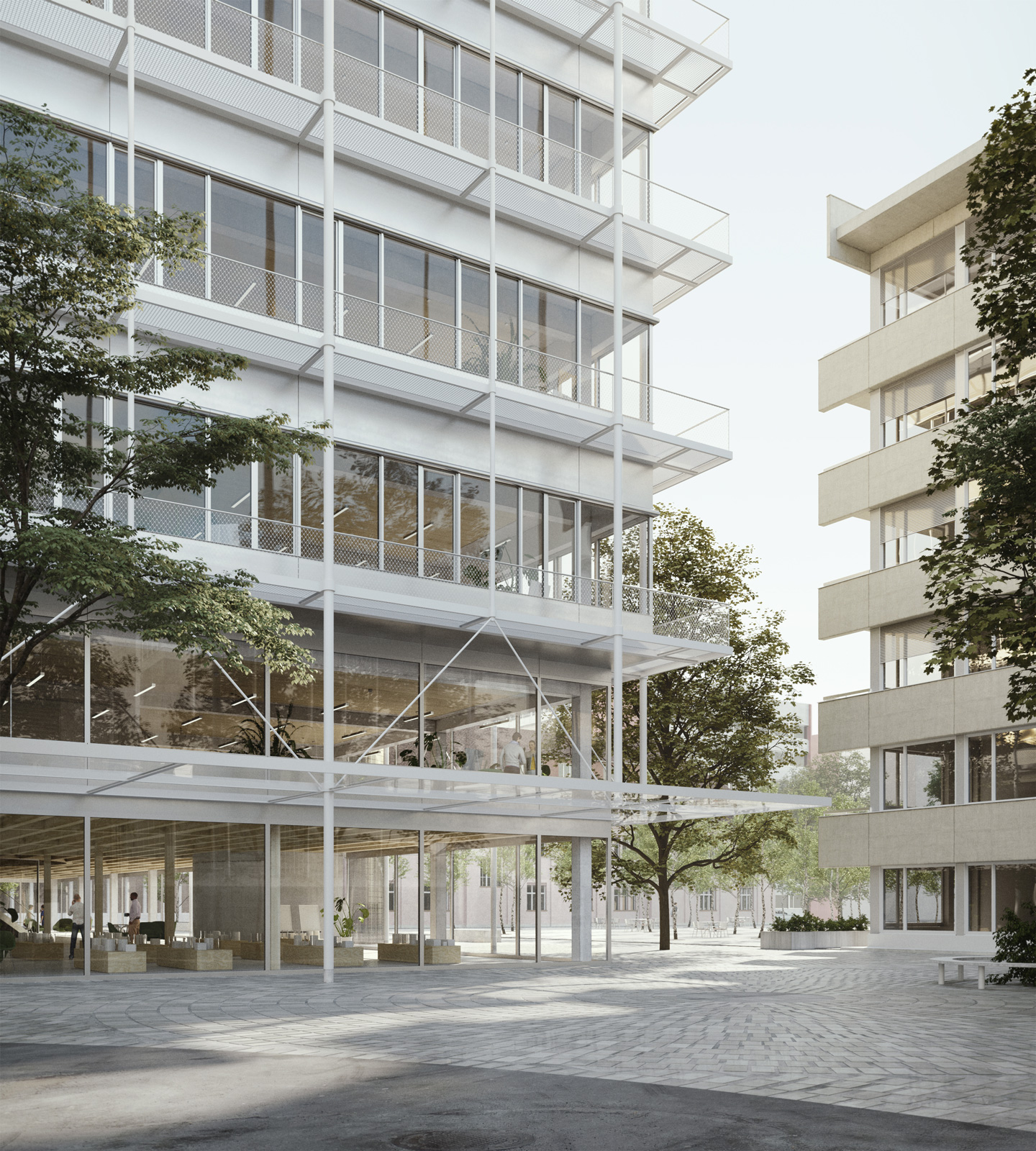
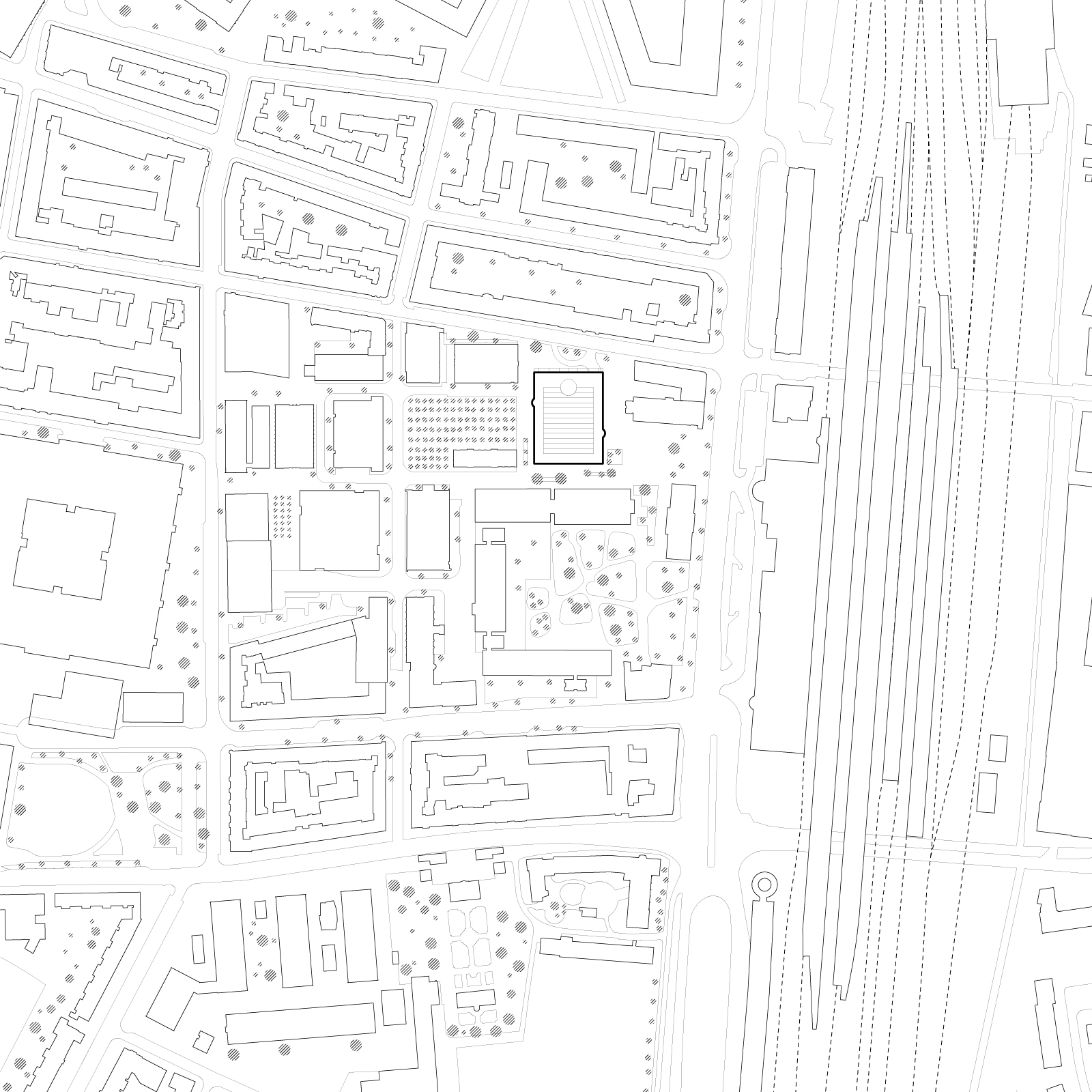
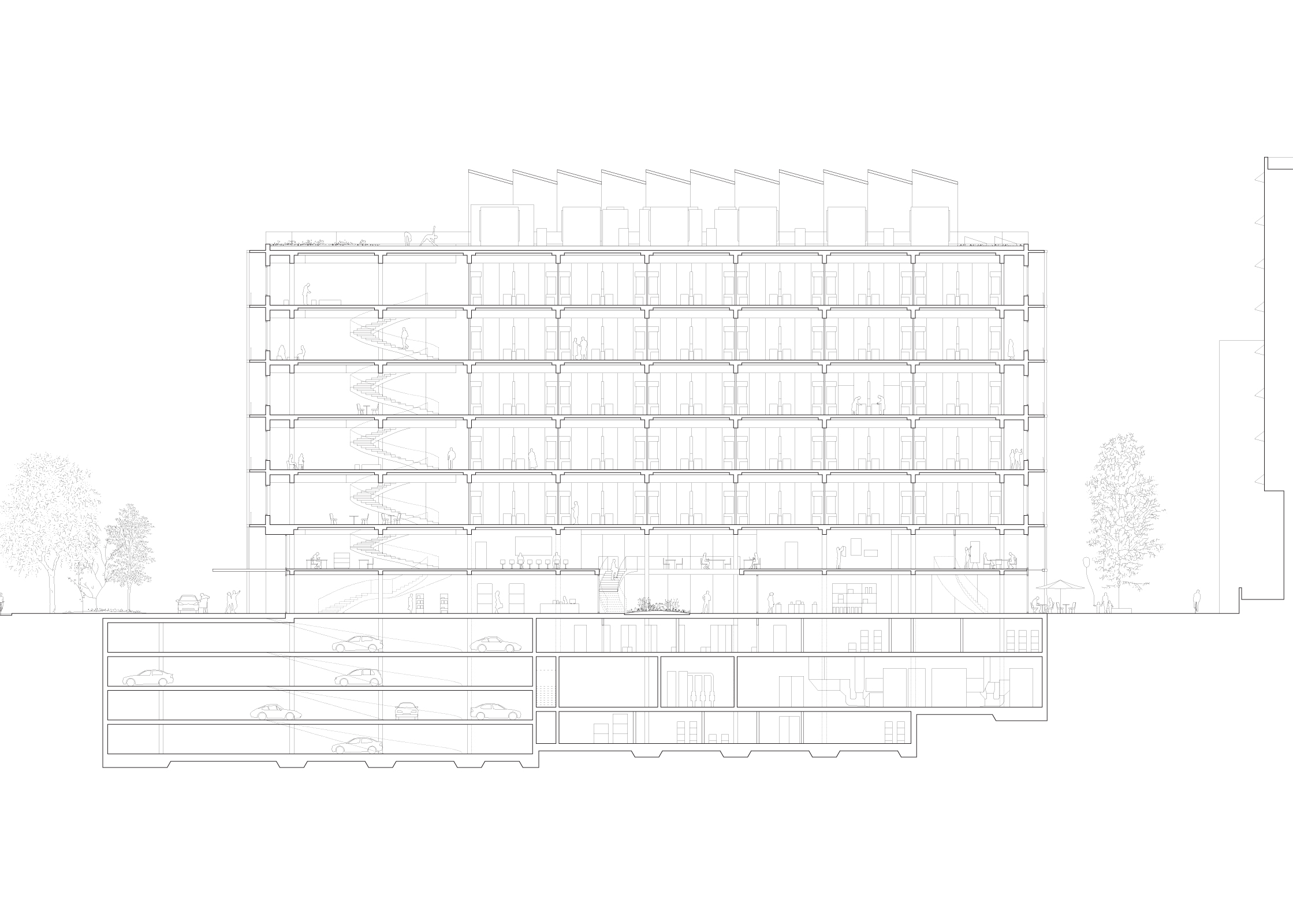
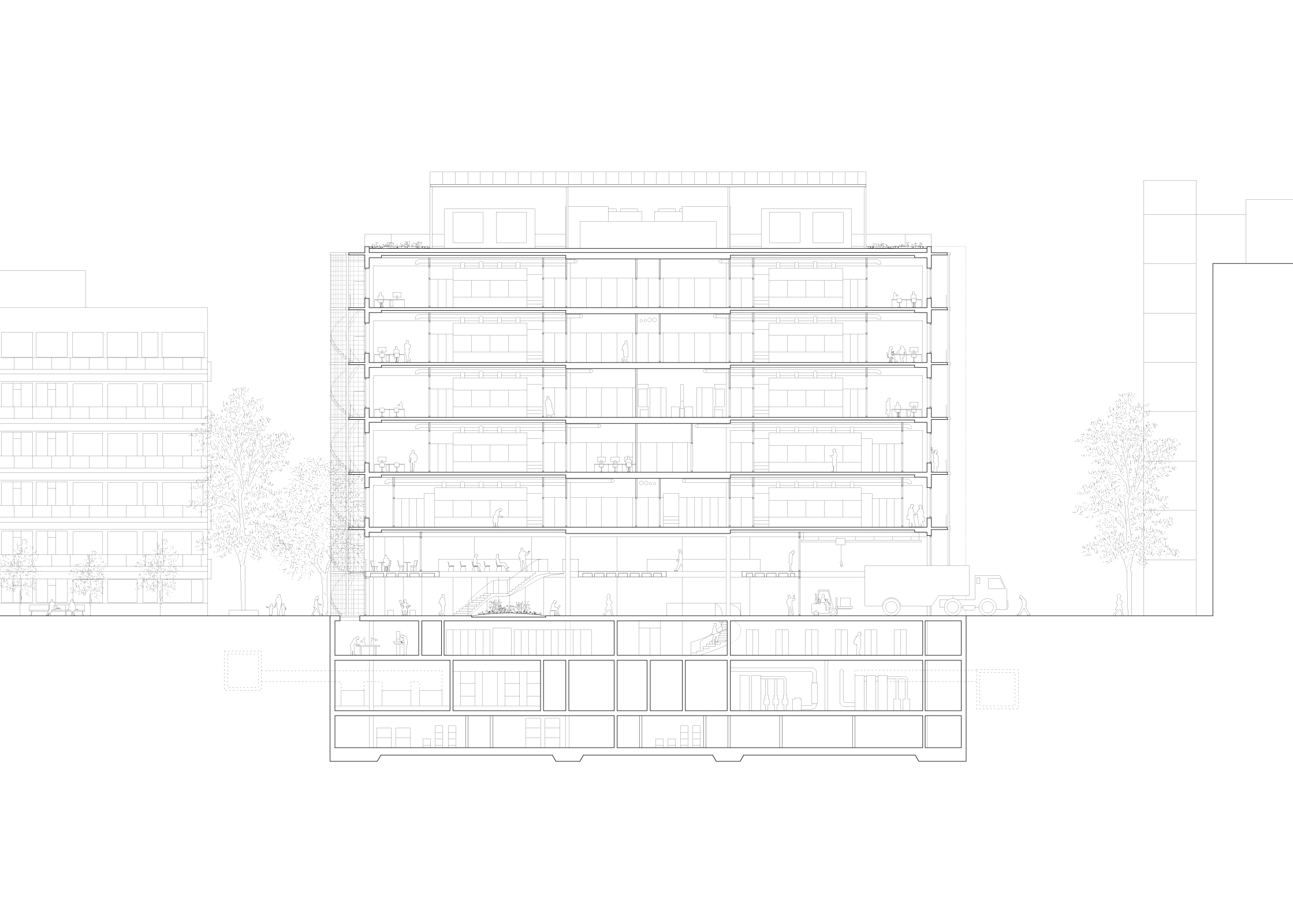
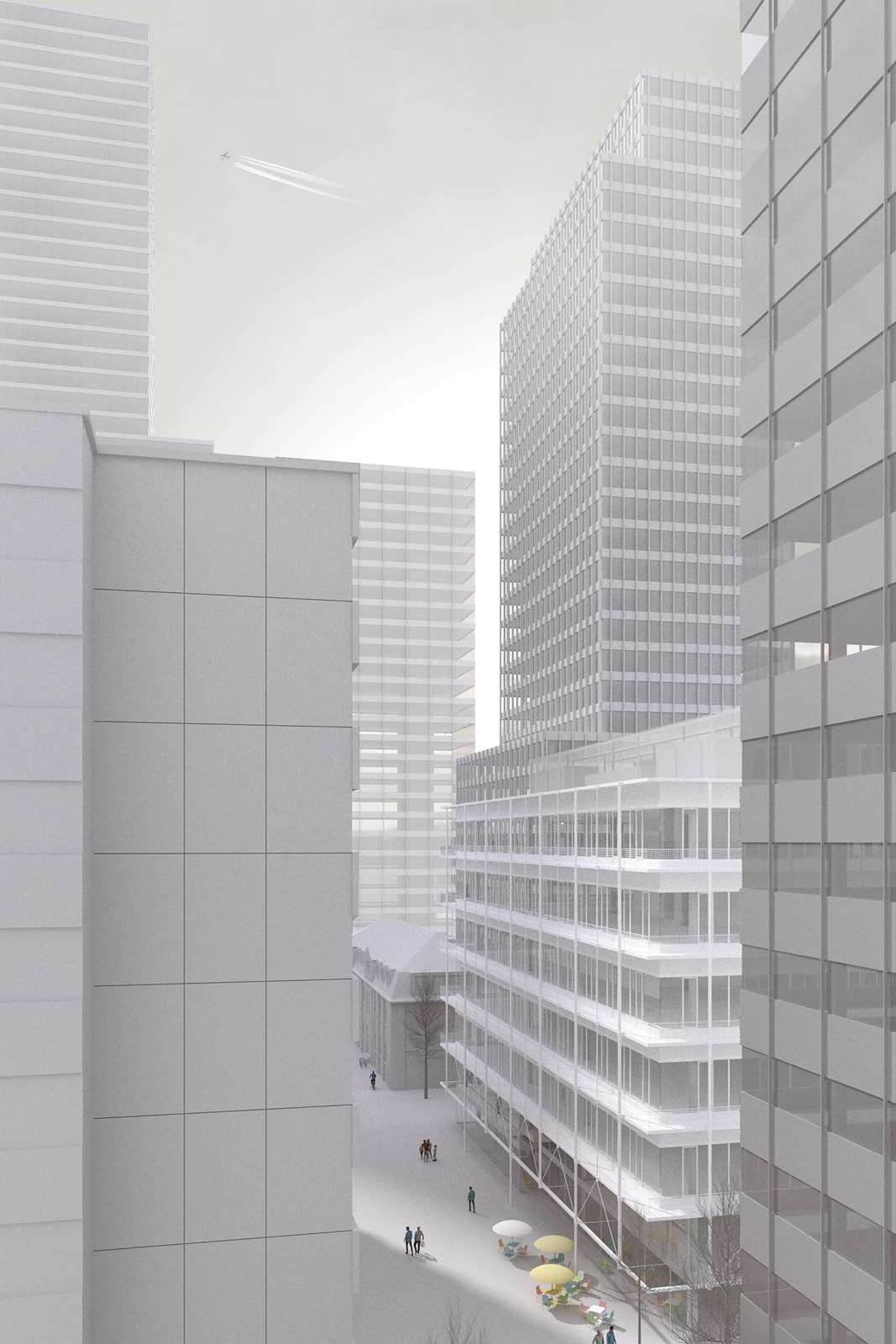
To support startups and promote research beyond the usual pharmaceutical giants, the City of Basel develops a new model for an incubator lab building, opening a former enclave to the city with a new typology. Intended to host multiple and changing tenants with highly specific and technical needs, the 30,000m2 building not only needs to be designed for flexibility and resilience but also to promote exchange and synergies between the tenants.
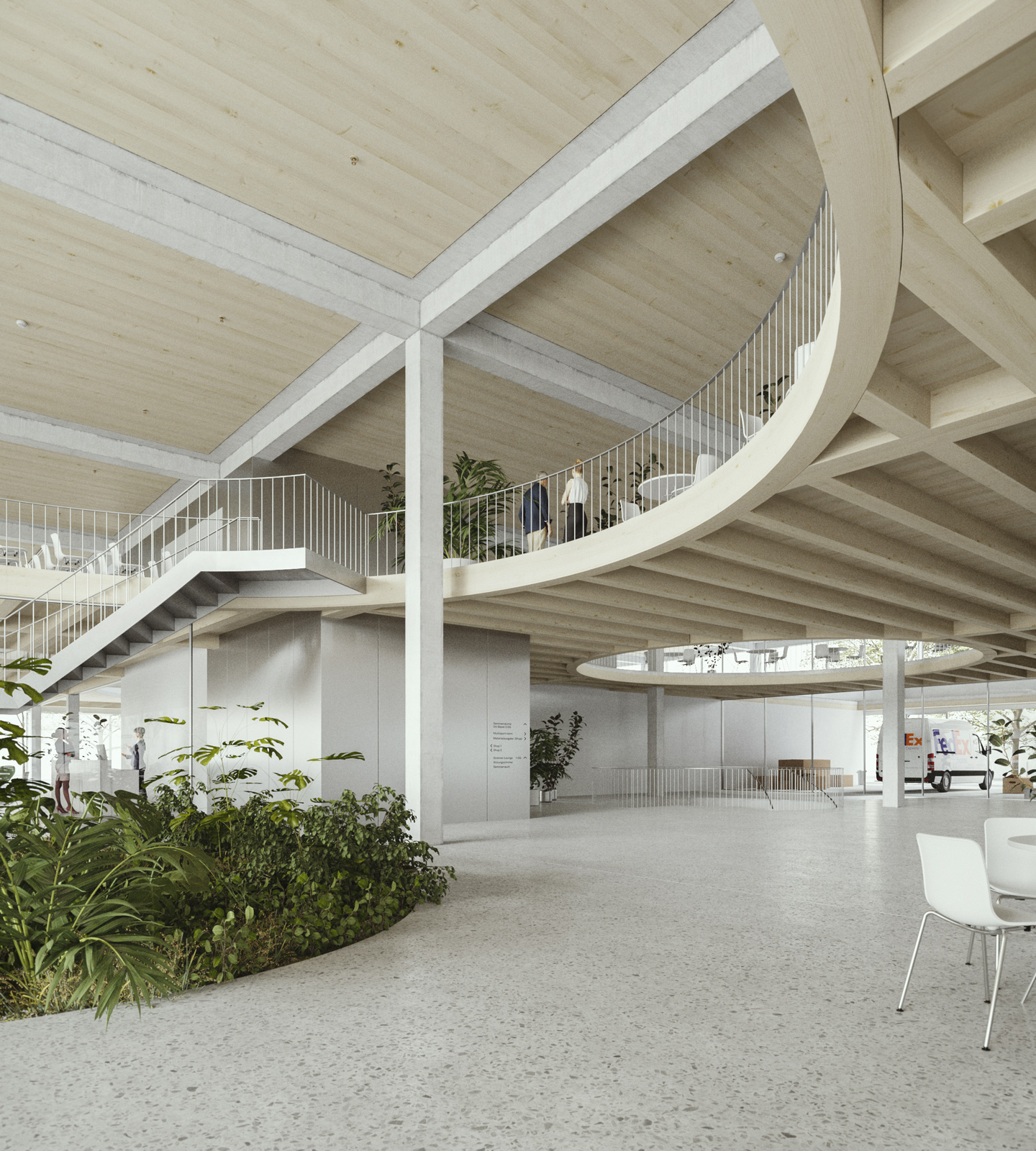
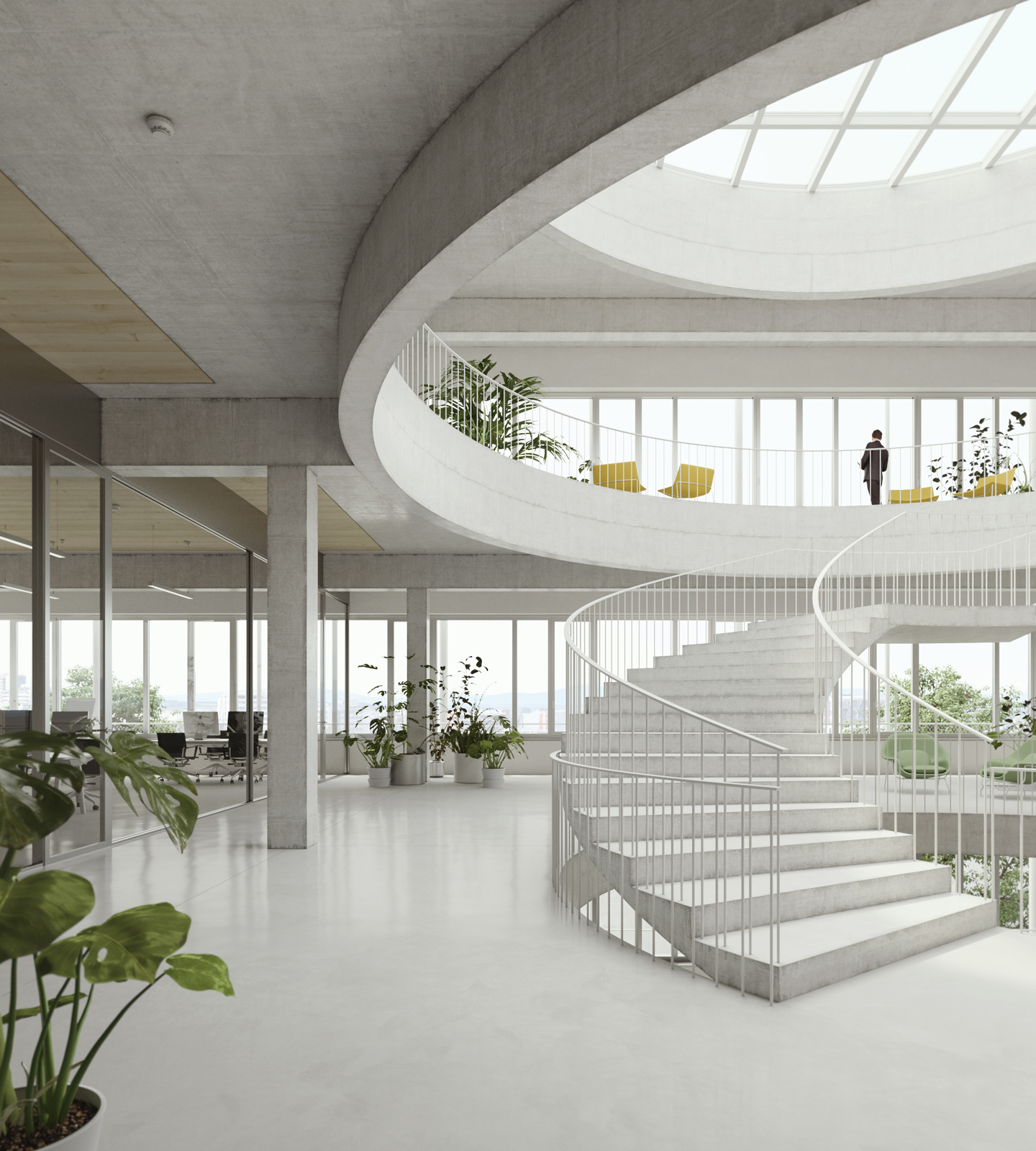
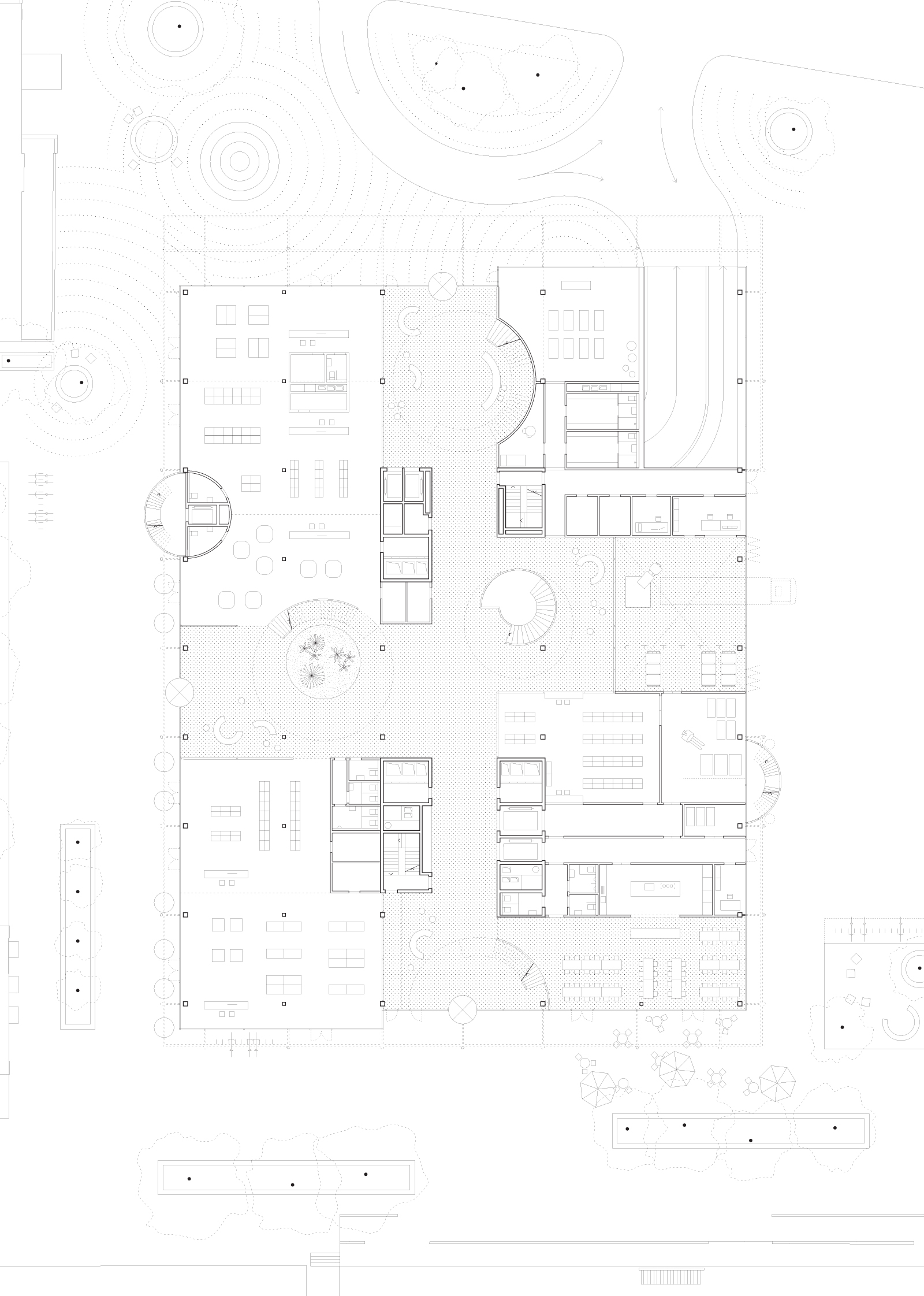
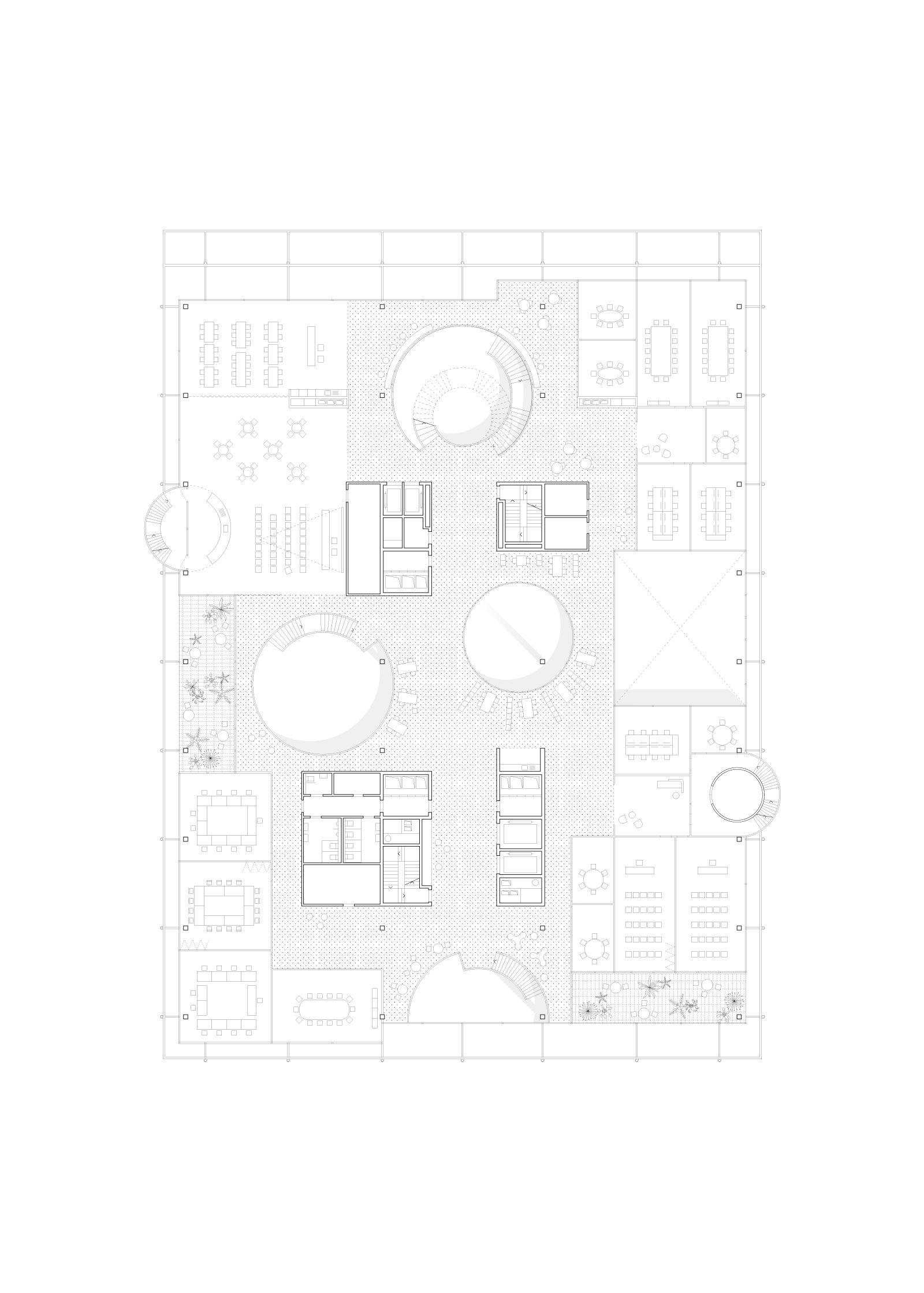
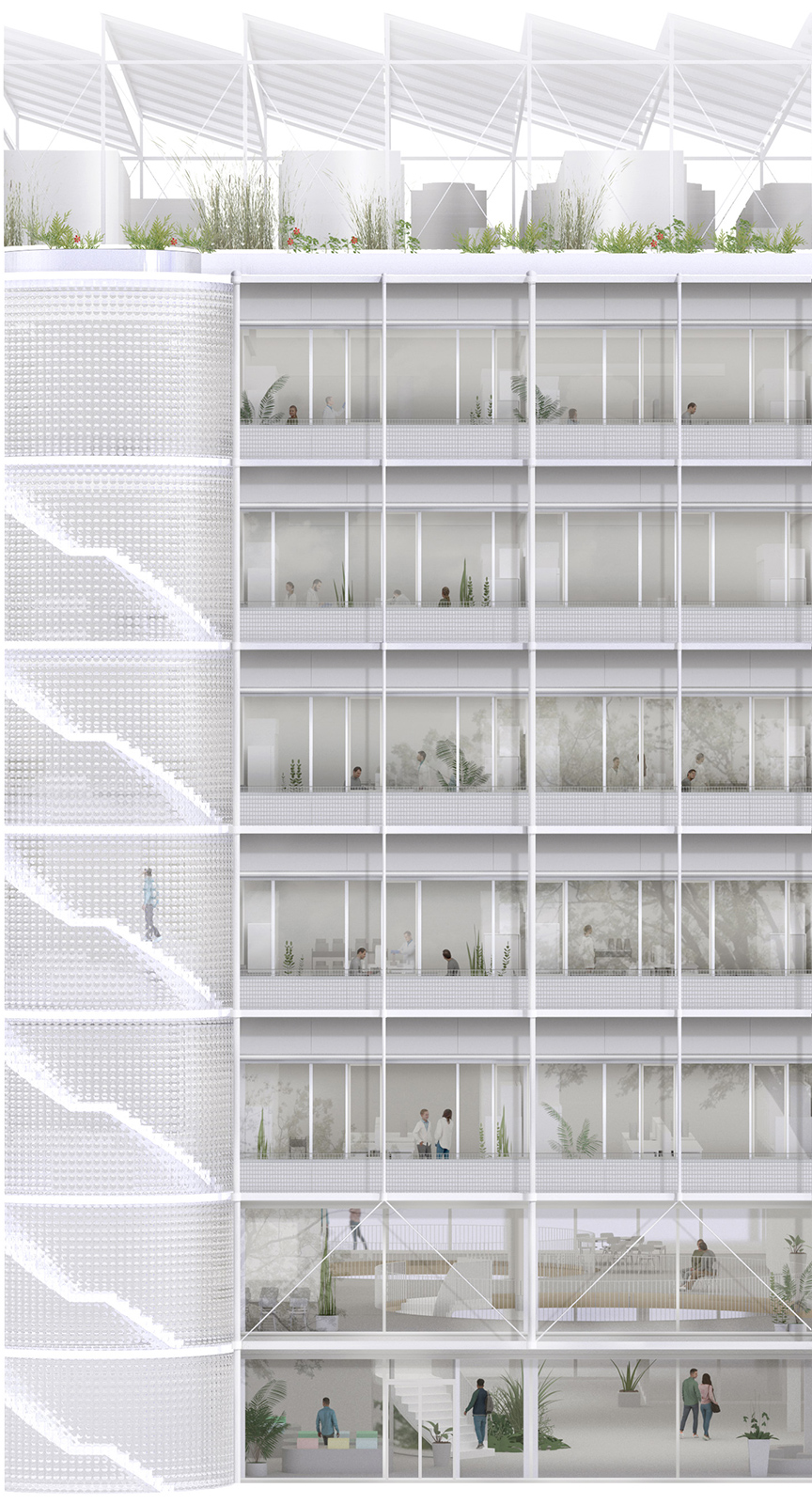
With a porous ground floor, this hub of exchange opens to the community beyond. The building meets the ground with a grand hall that extends the concept of squares and axes from the urban scale into the building and up into the mezzanine. On the upper floors, the quiet world of research is stacked vertically into a flexible and functional machine, stringed together by sculptural staircases that offer glimpses into the various institutions.
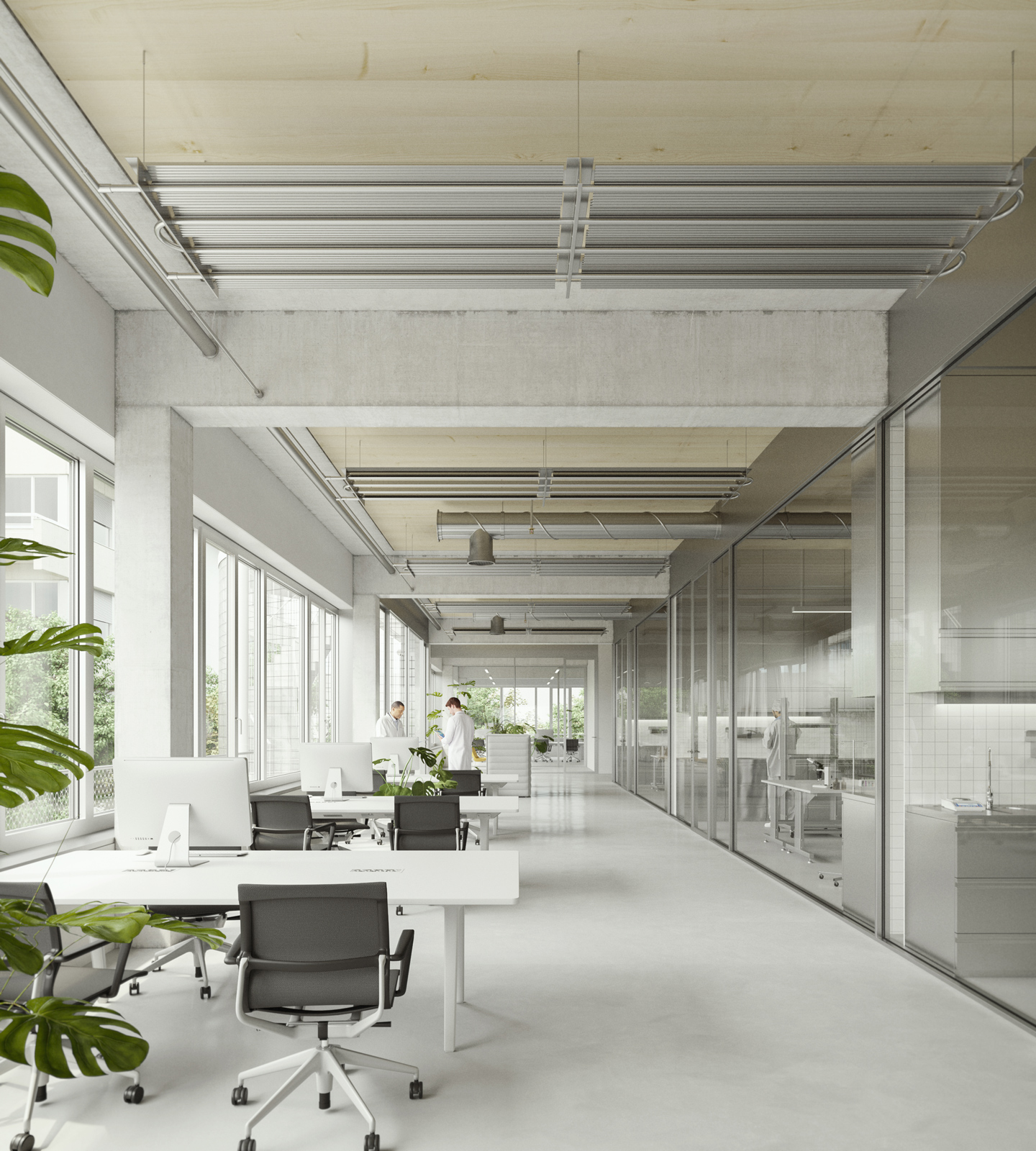
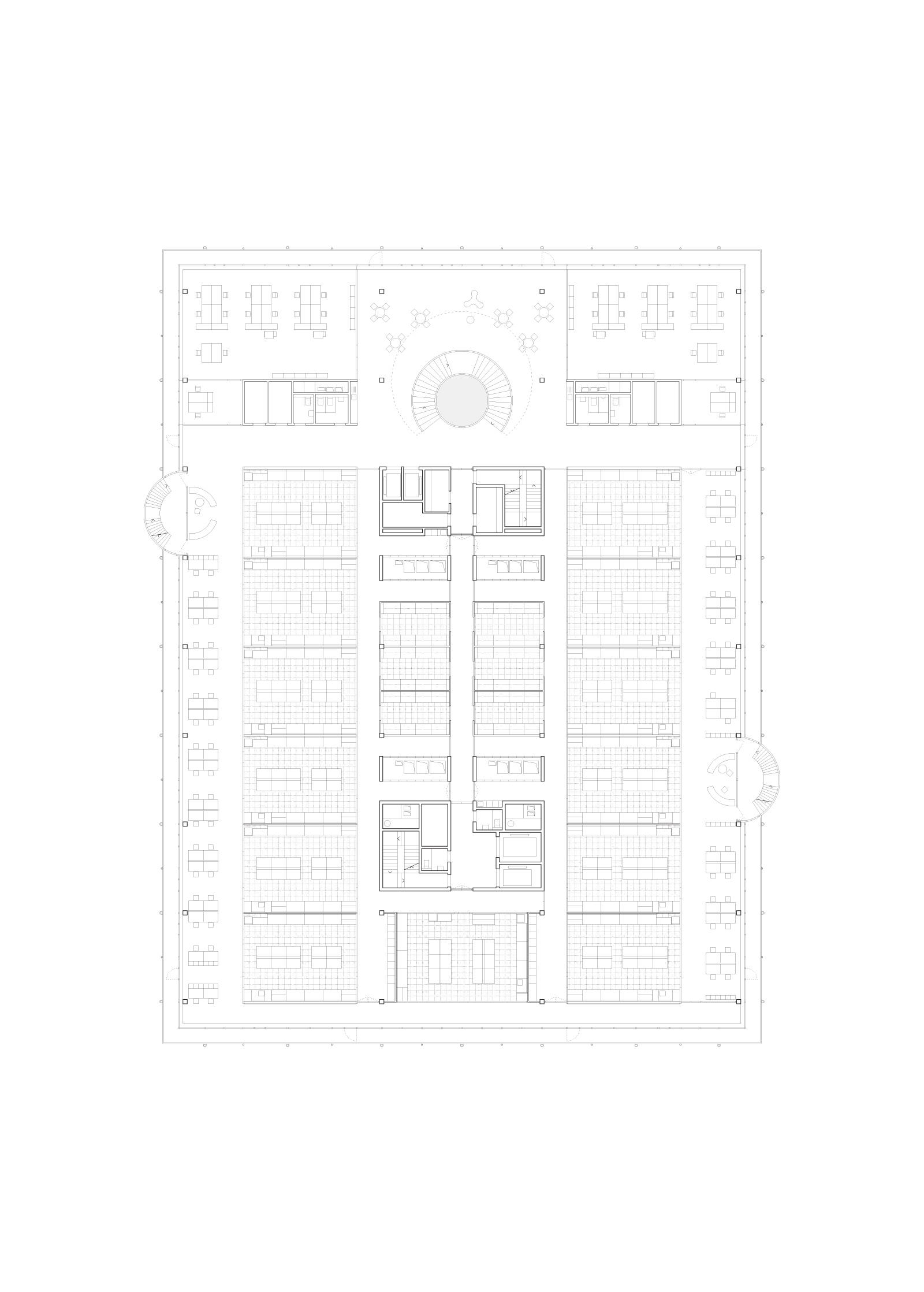
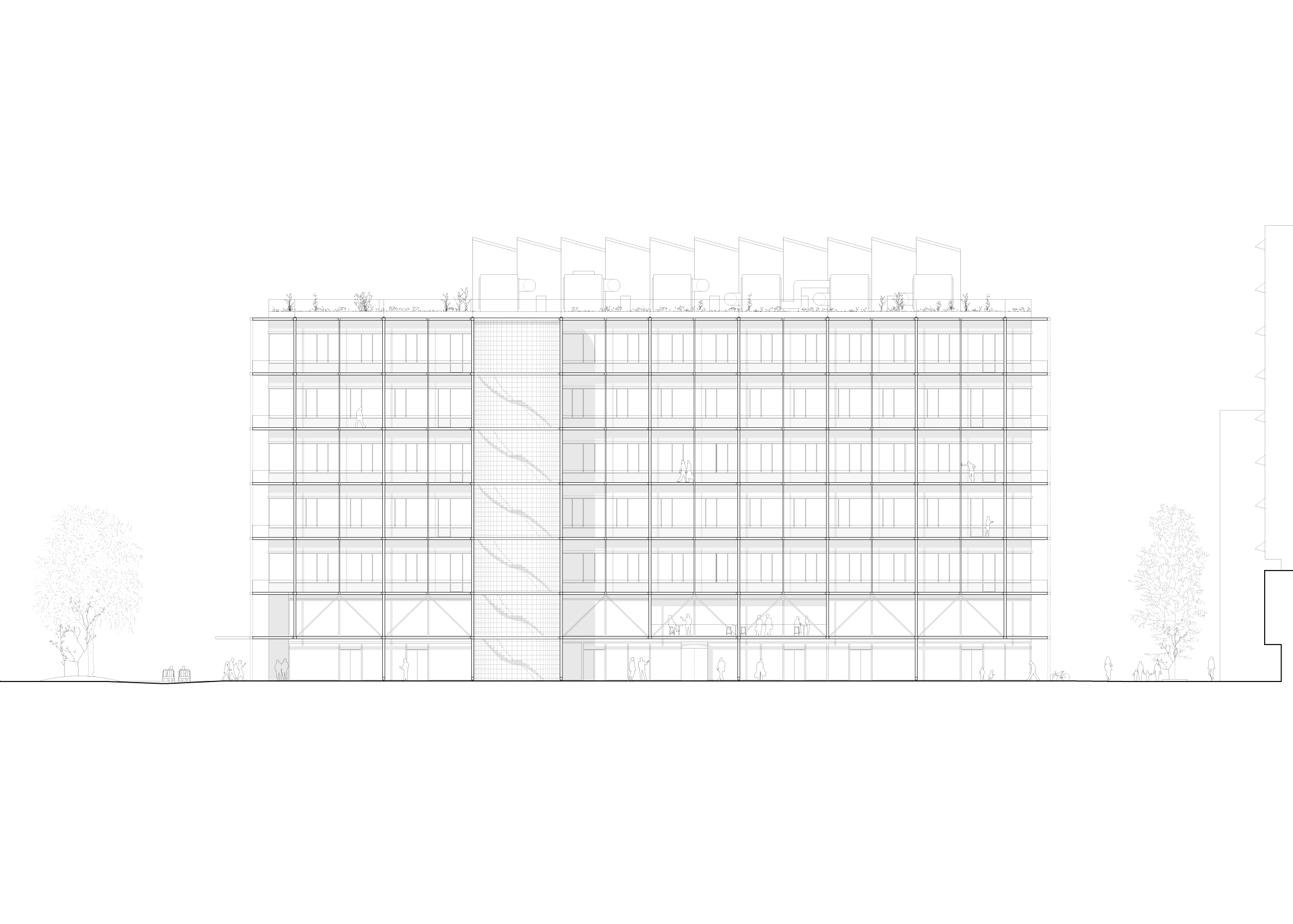
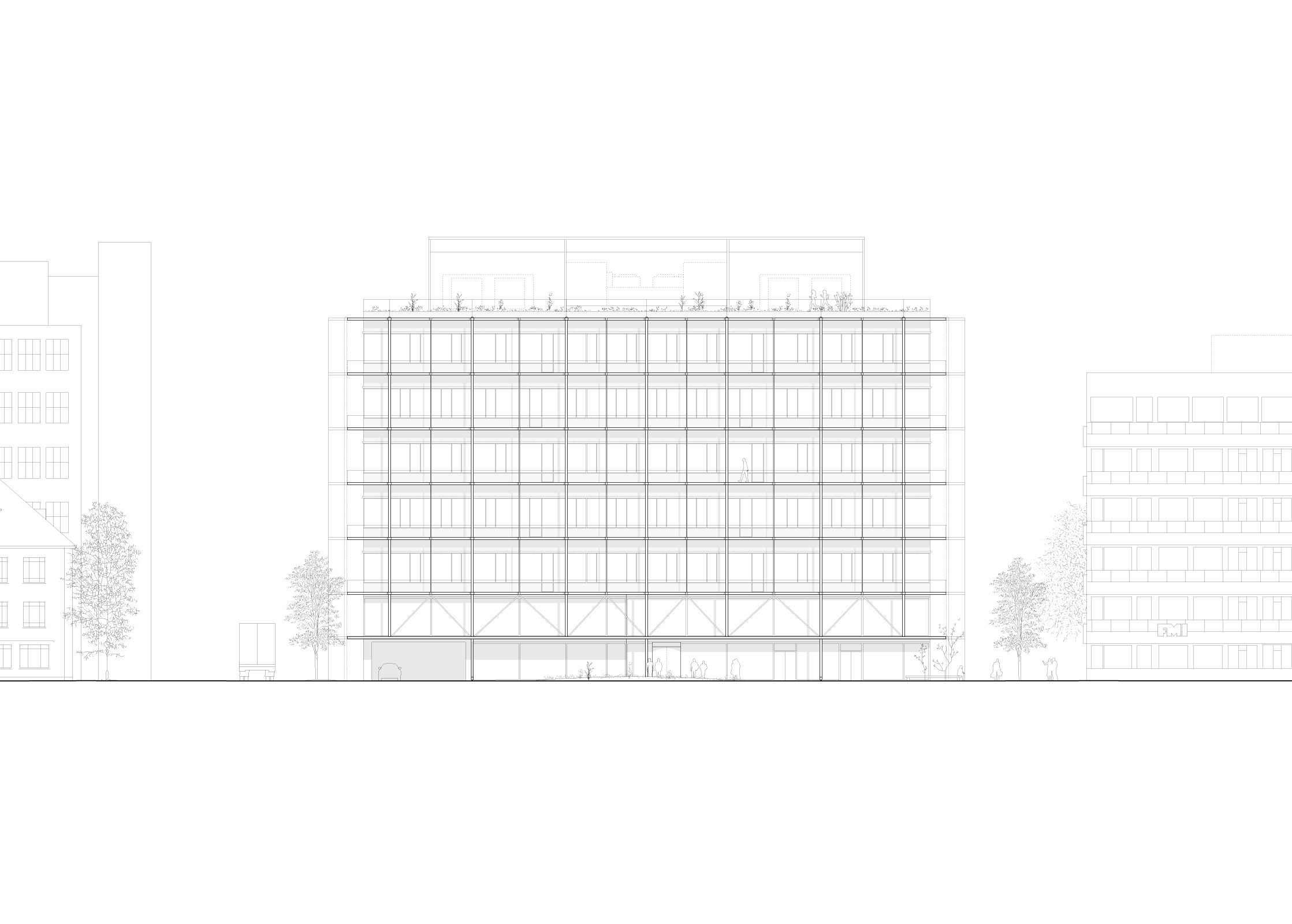
Although lab buildings are notorious energivores with highly-conditioned environments, this building meets the highest Swiss sustainability standards. By consolidating the service-intensive wet labs in the core of the building, the lab “mass” is treated as a building within a building, surrounded by a perimeter of more typical office spaces that offer a climate control buffer with natural ventilation and daylight control. An innovative slab system of rigid concrete frames with timber infills was developed, reducing the volume of concrete by more than 50% per floor. This hybrid structure makes the building resilient, serves as a carbon sink, and is also its expressive hallmark. The modular organization and the demountable timber infill would allow rentals over multiple floors to be easily connected.